
Indie Rock and Alternative Rock: What the Labels Actually Mean
Indie and alternative began as descriptions of how records were released and heard, not how they sounded. Here is how the two labels changed from the 1980s to the 2000s, what they mean today, and how to browse both on Music Soil.
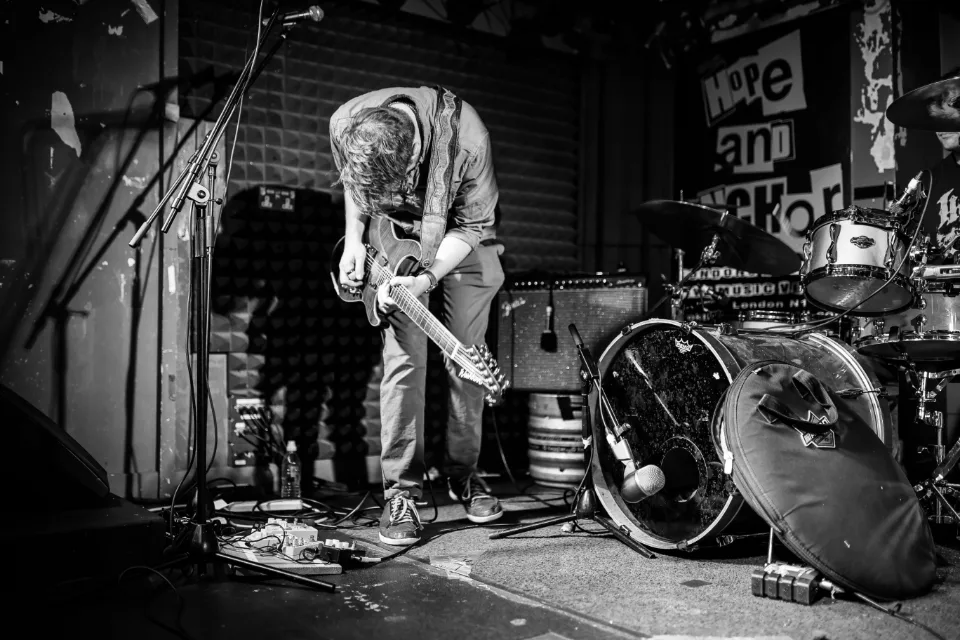
Indie rock and alternative rock are two of the most used labels in guitar music, and two of the least precise. Neither started out as the name of a sound. One described how a record was distributed, the other described what it was not. Over time both turned into genre names, and for years they were used almost interchangeably.
Knowing that history makes the labels much more useful. This guide explains where each term came from, how college radio and independent labels shaped the music, what changed when it reached the mainstream in the 1990s, and how to use both labels when you browse.
Two Labels That Began as Descriptions
“Indie” is short for independent, and at first it was meant literally. After Punk Rock, dozens of small do-it-yourself record labels appeared in Britain, and in January 1980 the first national Indie Chart was published, ranking records by how they were distributed rather than by style. By the mid-1980s, though, “indie” had come to mean a genre, or a cluster of related styles. The earliest known use of the phrase “indie rock” in print was in a Billboard article from January 1983, where it was shorthand for independent rock labels in New York.
“Alternative” defined the music by contrast: an alternative to mainstream, commercial rock and pop. The word came into use for rock music around the mid-1980s and was originally broad, covering musicians influenced by the sound or the do-it-yourself attitude of late-1970s punk. Some DJs trace it back further, to 1970s FM stations that presented themselves as an alternative to Top 40 radio. Before “alternative” became common around 1990, Americans usually called this music college rock.
College Radio and the 1980s Underground
College rock took its name from where it was heard: student-run radio stations at universities and colleges in the United States and Canada. Their playlists were picked by students who avoided the rock played on commercial stations, so the range was wide. Noise, retro country, avant-garde electronics and power pop could all share the same show. The writer Ian Svenonius has linked the spread of these stations to the many non-commercial licences that US regulators granted to universities in the 1960s.
The bands built their following without big budgets. They toured constantly, released cheap records, and spread through fanzines and word of mouth. Local scenes grew up around them: Athens, Georgia, home of R.E.M.; Minneapolis, home of Hüsker Dü and the Replacements; Boston, home of Pixies and Throwing Muses. British acts such as the Smiths and the Cure also found an audience on American college radio.
Several strands came together here. Early American alternative bands such as R.E.M. mixed punk influences with folk and mainstream pop, and R.E.M.’s debut album Murmur (1983) inspired a wave of Jangle Pop followers. Hüsker Dü and the Replacements started out in Hardcore Punk and became steadily more melodic. By the late 1980s the American underground also included the Noise Rock of Sonic Youth and Big Black. In September 1988 Billboard launched a chart of the songs most played on alternative and modern rock stations, a sign that the format had become big enough to measure.
The Independent Label System
Independent labels were the backbone of both scenes. In Britain, Post-Punk bands of the late 1970s, many of them on labels such as Rough Trade, Factory and Cherry Red, kept punk’s do-it-yourself approach while stretching its sound, and became a foundation for indie rock. The founders of Factory and Creation both cited the Sex Pistols’ 1976 concerts in Manchester as part of what sparked their interest. In the mid-1980s the music paper NME released C86, a cassette of current independent bands including Primal Scream, the Pastels and the Wedding Present, and the name soon became a style label in its own right.
In the United States, labels such as SST, Twin/Tone, Touch and Go and Dischord guided the shift from hardcore punk to the more varied styles that followed. In Seattle, Sub Pop promoted a sludgy, heavy sound that would soon be called Grunge, and in North Carolina, Merge Records became home to bands such as Superchunk. In New Zealand, Flying Nun Records and the bands of the Dunedin sound had a lasting influence on indie rock’s sound.
Major labels did sign some of these bands in the mid-1980s, Hüsker Dü and the Replacements among them, but those records did not match R.E.M.’s success, and the majors soon lost interest. That changed sharply a few years later.
The 1990s: Alternative Goes Mainstream
In the summer of 1991 the first Lollapalooza tour, conceived by Jane’s Addiction’s Perry Farrell, put a wide range of alternative acts on one bill and became the most successful tour in North America that summer. That September, Nirvana released “Smells Like Teen Spirit”, and the album Nevermind went on to establish that alternative rock could succeed commercially. By December 1991, Spin magazine was noting that alternative rock had moved into the mainstream.
Record companies rushed to sign guitar bands, and Pearl Jam, Soundgarden and Alice in Chains followed Nirvana into the charts. In Britain, Britpop bands such as Oasis, Blur, Pulp and Suede emerged partly as a reaction against American grunge. Once alternative rock was selling in large numbers, “alternative” became less a statement of independence and more a radio format and marketing category.
Indie rock split in response. One side moved towards mainstream radio; the other became more experimental. Pavement and Guided by Voices became the bands that, for many listeners, defined indie rock in this period, using rough, Lo-Fi production as a mark of their do-it-yourself values. Pavement’s 1992 album Slanted and Enchanted is a landmark of Slacker Rock, and the decade also saw the growth of styles such as Slowcore and Midwest Emo. By then, “indie rock” mostly referred to a musical style rather than to a band’s record contract.
What the Labels Mean Today
Until the early 2000s, the two terms were often used interchangeably. Indie rock was seen as a more British term and alternative rock as a more American one. In the early 2000s, indie rock became the most common American term for new guitar-based pop and rock, helped by the success of bands such as the Strokes, the White Stripes and the Libertines, part of a Garage Rock and Post-Punk Revival that was followed by Arctic Monkeys, Bloc Party and the Killers.
In practice, a few rules of thumb work well:
- Alternative Rock is the wider umbrella for rock that grew out of the underground after punk, and since the 1990s it has also covered guitar bands that crossed over to mainstream radio.
- Indie Rock usually signals a sound and an attitude linked to small labels and do-it-yourself values, even when the band has since signed to a major.
- Neither label describes one specific sound, which is why the subgenres underneath them are often more useful.
Exploring Indie and Alternative on Music Soil
On Discover, the Alternative & Indie family groups many of the styles in this article and opens a panel of subgenres with a count next to each one. A few ways to use it:
- Select Indie Rock and Alternative Rock with Match Any for a broad list, or Match All to see artists listed under both.
- Set the year range to the 1980s and sort by Oldest to hear the college-radio era.
- Add a country filter to compare British indie with the American underground.
Then pick a branch: Jangle Pop for chiming guitars, Noise Rock for something harsher, Slowcore for quiet and slow, Grunge or Britpop for the 1990s crossover years, or Post-Punk to hear where much of it started. To jump straight to a band you already know, use the Catalog.