House and Techno: How Two Dance Musics Grew Up Differently
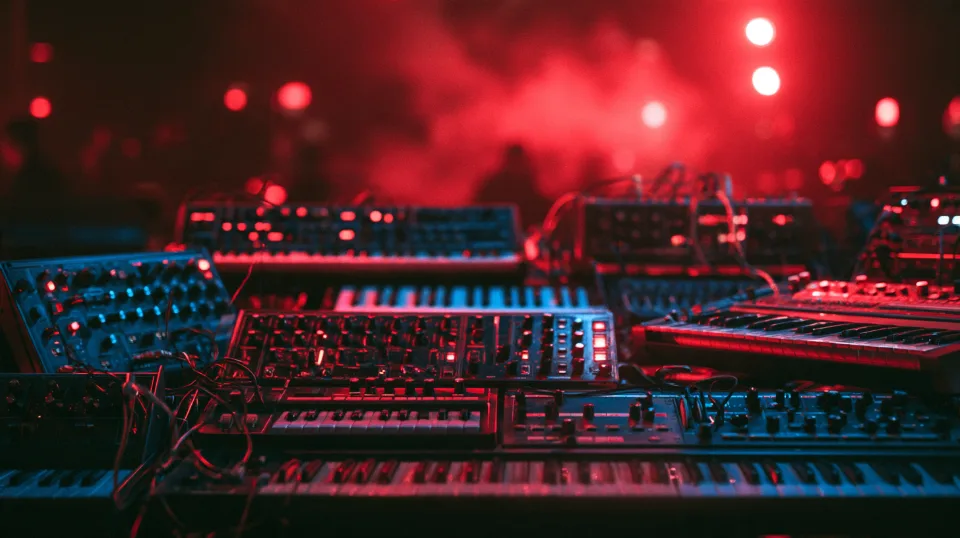
House came out of Chicago’s clubs and techno out of Detroit in the same decade, using much of the same equipment. Here is how they differ in roots, sound and scene, where each one branched next, and how to explore both on Music Soil.

House and techno are close relatives. Both were built on drum machines and a steady kick drum, both took shape in Midwestern American cities in the 1980s, and both drew on African American dance music. Records and DJs moved between the two scenes from early on. Yet they grew up with different aims, and that shows in how they sound.
This guide follows each one from its home city, explains the musical differences you can actually hear, and maps the main branches each style grew afterwards.
Chicago: House Picks Up Where Disco Left Off
House was created in Chicago by DJs and producers from the city’s Black, queer underground club culture. It developed slowly in the early and mid-1980s, as DJs reworked Disco records and gave them a more mechanical beat. After the anti-disco backlash of the late 1970s, whose best-known moment was Disco Demolition Night in Chicago, dance music largely moved out of the major labels and into the hands of club DJs.
Two DJs were central. Frankie Knuckles, resident at a club called the Warehouse from 1977 to 1982, mixed songs into each other instead of simply playing them one after another, and used a drum machine and a reel-to-reel tape player to build new versions. Ron Hardy, at the Music Box, became known for similarly unconventional mixes. Where the word “house” came from is disputed. One account links it to the Warehouse and to a local record shop that labelled bins of the club’s music; others say it described music made at home, or a club’s own signature records.
From 1985 and 1986, more Chicago DJs began releasing their own tracks, made on newly affordable electronic instruments. Local radio, especially the Hot Mix 5 shows on WBMX, and labels such as Trax Records and DJ International spread the sound. It soon travelled: Farley “Jackmaster” Funk’s “Love Can’t Turn Around” reached number 10 in the UK singles chart in 1986, and Steve “Silk” Hurley’s “Jack Your Body” went to number one there in January 1987.
Detroit: Techno Looks to the Future
Techno grew in Detroit around Juan Atkins, Derrick May and Kevin Saunderson, later known as the Belleville Three. They admired European electronic music and Synth-Pop, especially Kraftwerk, Giorgio Moroder and Yellow Magic Orchestra, but they also grew up on funk. A long-running late-night radio show hosted by Charles “The Electrifying Mojo” Johnson played those worlds side by side, putting Kraftwerk next to Parliament-Funkadelic.
Atkins came first. With Richard Davis he formed Cybotron, whose early-1980s tracks included “Clear” (1983) and “Techno City” (1984), records many listeners would file under Electro. He borrowed the word “techno” from the futurist writer Alvin Toffler, whose book The Third Wave fed the music’s science-fiction imagery. In 1985 he founded the label Metroplex and released “No UFO’s” as Model 500, a record generally considered the first techno production.
The name stuck in 1988, when a UK compilation of Detroit tracks came out as Techno! The New Dance Sound of Detroit. It had originally been planned as The House Sound of Detroit, which shows how close the two styles still were. Derrick May’s “Strings of Life” (1987), released as Rhythm Is Rhythm, is regarded as a classic of both genres and sits right on the border between them.
How They Sound Different
Both styles usually run on a four-on-the-floor kick, a bass drum on every beat, and both prize the same drum machines, especially Roland’s TR-808 and TR-909. The difference is in what sits on top of that pulse.
House typically runs at about 120 to 130 beats per minute, with claps or snares on the second and fourth beats and hi-hats on the off-beats. It leans on deep basslines, and it often has vocals, whether sung, spoken or sampled. Many tracks are built from loops or samples of disco, soul, funk and jazz-funk records, so even purely electronic house tends to keep a song-like warmth.
Techno is made for continuous DJ sets and covers a wider tempo range, roughly 120 to 150 beats per minute. Rhythm comes before everything else: vocals and melodies are uncommon, and producers focus on synthesised sounds and repeating patterns rather than conventional chord changes. The later Detroit sound of Underground Resistance and Jeff Mills is often described as harder, faster, colder and more minimal than house.
- If you hear a singer, a piano riff or a disco sample, it is most likely house.
- If the track is built almost entirely from drums, synth textures and slowly changing loops, it is probably techno.
- If it sits in between, you are in good company: plenty of records are claimed by both.
Two Scenes, Two Directions
House stayed close to the dancefloor as a community. Early house lyrics were often uplifting and spoke to people treated as outsiders, especially African Americans, Latinos and gay clubgoers, and Knuckles himself likened the Warehouse to a church. The sound spread east, where New York and New Jersey clubs such as the Paradise Garage and Club Zanzibar favoured a deeper, more soulful style known as garage or the Jersey sound, with gospel-style piano and female vocals. In Britain, house fed the acid house boom and the so-called Second Summer of Love of 1988 and 1989.
Techno found a second home abroad. In the early 1990s many Detroit producers saw little interest in the United States and looked to Europe instead. Berlin, newly reunified after the fall of the Wall, became the key city: the club Tresor, opened in 1991, hosted many Detroit artists, and in 1993 Tresor Records released a compilation titled Tresor II: Berlin & Detroit – A Techno Alliance. A second wave of Detroit producers, including Carl Craig and Underground Resistance’s Jeff Mills, Mike Banks and Robert Hood, made their names in that period.
Where House Went Next
House split into branches almost as soon as it existed:
- Deep House traces back to Larry Heard’s jazzy, soulful recordings as Mr. Fingers, such as “Mystery of Love” (1985) and “Can You Feel It?” (1986).
- Acid House was rougher and more abstract, built on the squelching sound of the Roland TB-303 bass synthesizer. Phuture’s “Acid Tracks”, released by Trax Records in 1987, is usually cited as its first record.
- Hip House crossed house with rap in late-1980s Chicago, with Tyree Cooper’s “Turn Up the Bass” (1988) as an early breakthrough.
- Ghetto house, a rawer Chicago sound of the 1990s, grew up around the Dance Mania label.
Where Techno Went Next
By the early 1990s techno had regional variants across Britain, Germany, Belgium and the Netherlands, among them acid, hardcore, bleep, ambient and dub techno. In Berlin, DJs pushed the music faster and harsher, drawing on Dutch gabber, Belgian hardcore and the EBM of bands such as DAF, Front 242 and Nitzer Ebb, a line that leads towards Hardcore Techno. Fans tend to be careful with the word itself, and keep neighbouring styles such as Tech House apart from techno proper.
Others went the opposite way. Robert Hood felt techno had become too rave-oriented, and his stripped-down answer, keeping only the drums, bass and groove needed to make people move, is credited with starting minimal techno. Meanwhile, Sunday-morning sessions at a Frankfurt club mixed house, new beat and synth-pop, and the Frankfurt Trance scene is believed to have grown out of that blend.
Exploring House and Techno on Music Soil
Start with the House and Techno genre pages, which show their best-known artists first and list related styles. Then open Discover and choose the Electronic family, which opens a panel of subgenres with a count next to each one.
- Sort by Oldest to hear the 1980s pioneers before the later waves.
- Add a country filter to follow the story abroad: the United Kingdom for acid house, Germany for the Berlin connection.
- Use Match All with House and Techno to find artists listed under both.
Then follow the branch that suits you: Deep House or Hip House for warmth and voices, Acid House for the TB-303 sound, EBM or Hardcore Techno for something harsher, or back to Disco, Electro and Synth-Pop to hear what both styles were built from. If you already know an artist, the Catalog takes you straight to their page.